Indian Granite vs. Italian Marble: Which is Best for Your Kitchen?
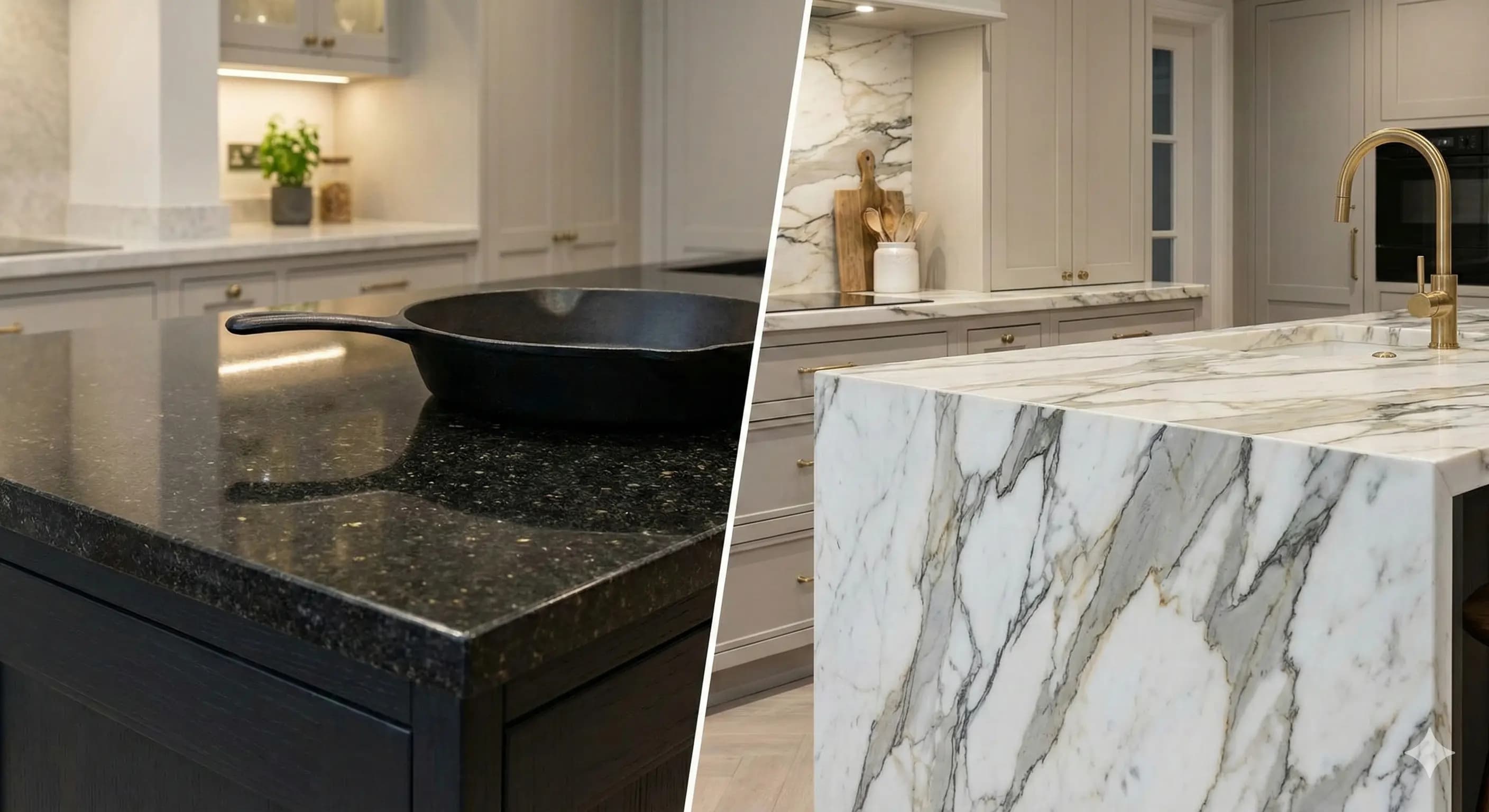
One of the most frequent questions we receive from homeowners, interior designers, and architects at Trant Marble is: "Should I choose Italian Marble for the lavish look, or Indian Granite for long-lasting durability?"
The answer depends entirely on where and how you plan to install the stone. An Indian kitchen has drastically different functional demands than a luxury drawing room. Here is our direct, practical comparison to help you choose the right surface.
1. Durability, Hardness & Heat Resistance
Daily kitchen activities involve sharp knives, heavy cookware, boiling pots, and acidic food items. Here is how both stones react:
- Indian Granite (The Kitchen Workhorse): Granite ranks at 6 to 7 on the Mohs hardness scale. It is virtually scratch-proof and heat-resistant up to extreme temperatures. You can place hot tawas, kadhais, and pressure cookers directly on the stone without worrying about cracking or burn marks. Varieties like Black Galaxy, Rajasthan Black, and Lakha Red are practically non-porous.
- Italian Marble (The Delicate Beauty): Italian marble (such as Statuario, Botticino, or Calacatta) is a metamorphic limestone composed primarily of calcite, ranking at only 3 to 4 on the Mohs scale. It is naturally porous and prone to chemical etching when exposed to lemon juice, vinegar, or harsh cleaners.
2. The "Haldi & Oil" Test: Stain Resistance
Practical Rule of Thumb: Any stone used for Indian kitchen cooking must resist oil, turmeric (haldi), and tomato acids.
Because Italian marble contains calcium carbonate, acidic spills react with the surface within minutes, creating dull spots known as etch marks that cannot simply be wiped away with soap. Indian granite, on the other hand, has high quartz and feldspar content, making it virtually impervious to everyday culinary staining.
3. Head-to-Head Comparison Table
| Feature | Indian Granite | Italian Marble |
|---|---|---|
| Mohs Hardness | 6 – 7 (Very Hard) | 3 – 4 (Soft) |
| Heat Tolerance | Excellent (Takes hot pans directly) | Moderate (Thermal shock risks) |
| Stain Susceptibility | Very Low (Almost zero porosity) | High (Prone to acid etching & stains) |
| Maintenance Required | Zero to minimal maintenance | Periodic sealing & re-polishing |
| Average Price Range | ₹60 – ₹200 / sq. ft. | ₹250 – ₹2,500+ / sq. ft. |
4. The "Luxury" Factor & Modern Finishes
- Italian Marble: Unsurpassed for high-glamour interiors. The book-matched veining, deep crystal gloss, and soft luminosity make it the premier choice for drawing rooms, master bedrooms, and hotel lobbies.
- Indian Granite: No longer limited to basic speckled countertops. Modern architects now prefer Leather (Lapato) and Honed finishes on granites like Black Marquino, Titanium Black, and Z-Black to create sophisticated, anti-glare, contemporary kitchen spaces.
The Final Verdict
- For Kitchen Countertops & Utility Counters: Always choose Indian Granite. It delivers lifetime durability, resists heavy cookware, and requires virtually zero maintenance.
- For Living Hall Flooring & Accent Walls: Choose Italian Marble or premium Indian Makrana White Marble to achieve unmatched luxury and grandeur.
- For Dining Tables & Breakfast Counters: If you love marble aesthetics, consider sealed Quartzite or leathered granite which deliver marble-like flowing veins with granite-level hardness.
Need help selecting slabs for your floor plan?
Contact the Trant Marble and Granite advisory team. We can share live factory slab videos, book-matching layouts, and accurate wholesale price estimates directly over WhatsApp.